The gorge once the crowds have gone
In summer, visitors at the Alcantara Gorges queue for the staircase and hunt for a free patch of pebbles to leave their bags on. October is different: hardly anyone around, the basalt walls in shade by mid-afternoon, the river louder after the first rains. From November the gates are locked and anyone who turns up finds the way down closed. That doesn’t mean the trip is wasted.
This page is about what you can actually do between October and March: how long you can still go down into the canyon, what to see once it’s closed, and how to read the river after a storm.
Open until 31 October, then closed
In 2026 both entrances to the canyon close on the same day.
The municipal staircase in Motta Camastra, the public entrance, is open from 4 April to 31 October. October hours are 9:00 to 17:00 and a ticket costs €2. The town council warns that hours can change with visitor numbers and weather, and at the end of the season the weather matters a lot.
The Botanical and Geological Park, the private entrance, lists 31 October 2026 as its last day on its website, with its own paid packages.
From November to March the river stays closed and nothing runs on the water. This year the staircase reopened on 4 April; for next spring, watch for the council’s announcement. Current hours and prices are in our opening hours and tickets guide.
October, the last month to go into the canyon
If you can choose, October is a good bet. Around midday it’s still above 20°C, the August coach tours have gone, and the low sun brings out the pattern of the basalt columns far better than the flat summer light. For photography it’s the best month of the year.
A few things do change. The water is as cold as ever, 10-15°C, but there’s no longer the heat that dries you off in ten minutes, so a fleece and a full change of clothes in the car stop being optional. Body rafting has already finished: in 2026 the private park ran its last sessions at the end of September. And the first heavy rains often arrive now; a couple of bad days over the Nebrodi mountains is enough for river access to be suspended. With closing at 17:00, aim to arrive in the morning.
November to March, with the river closed
You can’t walk inside the gorge, but the valley has more to offer in winter than most people expect.
The Motta Camastra viewpoints
From the village and from the road down to Fondaco Motta you can look into the mouth of the canyon from above. It isn’t the same as standing on the riverbed, of course. But in winter the river carries far more water, and watching it churn between the dark walls is something you won’t see in summer. There’s more on the Motta Camastra village page.
The Gurne of Francavilla
The Gurne loop, roughly a kilometre and a half past pools and small waterfalls cut into the basalt, is open in winter too, and it’s probably at its best after a week of rain. Wear shoes with decent grip, because wet rock and mud are slippery. If the water is high and muddy, enjoy it from the viewpoints and don’t go down to the pools.
Walking in autumn
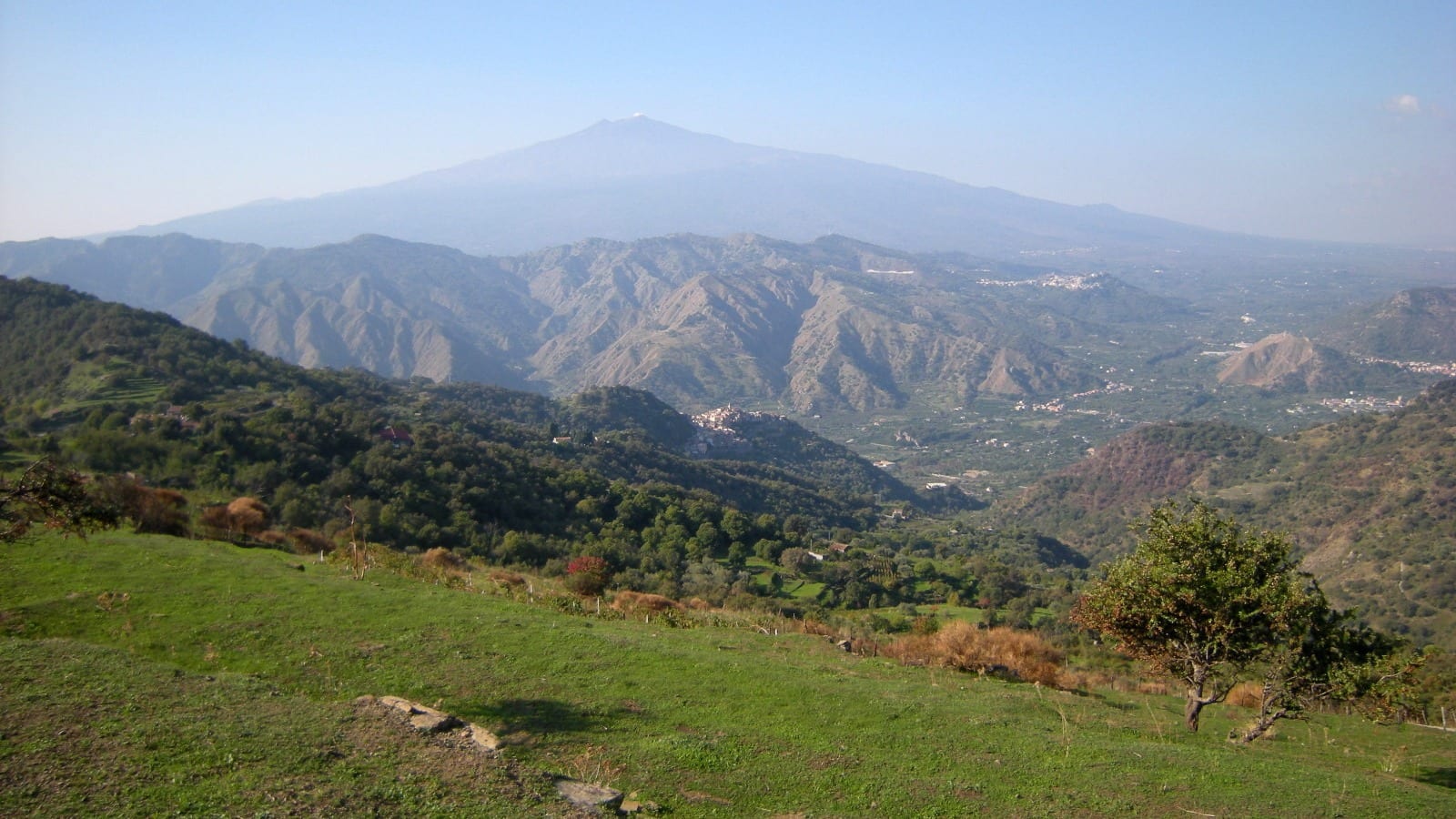
For hiking, autumn beats summer hands down. There’s no haze, the air is crisp after a front has passed, and Etna stands out sharply from almost every ridge. Three routes that are at their best this time of year:
- the Mojo volcanic cone, a small side vent of Etna about fifty metres high, with a walk around the crater rim;
- Montagna Grande, with a wide view over Etna and the whole valley;
- Le Rive di Graniti, along the river and walkable all year when the weather is good.
In midwinter you may find snow or ice higher up. Days are short, so start early and keep walks modest.
The villages
Out of season the valley villages slip back into their everyday rhythm: the bar on the square, older residents on benches in the sun, shutters closed at lunchtime. In Castiglione di Sicilia the castle sits on a rocky spur above the houses. Randazzo has a medieval centre built entirely of lava stone and is the coldest village in the area in winter. In Francavilla di Sicilia you’ll find the ruins of the Ruffo castle. In winter many historic sites have shorter hours or open by appointment; details are in our guide to the castles of the valley.
Wine, olive oil and seasonal food
On Etna’s north side the vineyards are high up and the harvest comes late, often well into October. It’s a good time to visit a winery around Castiglione, Passopisciaro and Randazzo; book ahead, because these are working days. For help with the districts and grape varieties, see our Etna DOC wines guide.
Between October and December the olives are picked, and at the mills you can taste oil fresh from the press, green and peppery. Mushrooms, chestnuts and warm ricotta turn up in the trattorias, followed by Christmas sweets. On Saint Martin’s Day, 11 November, the new wine is opened.
Etna under snow
From December to March Etna often has a white summit, and the view from the valley changes completely: dark basalt and still-green citrus groves below, a snow-covered volcano above. The viewpoints in Motta Camastra, Castiglione and Randazzo are the best places to see it.
If you’d like to walk in the snow, head up to Piano Provenzana on the north side, above Linguaglossa. The ski lifts only open once there’s been enough snow, usually between Christmas and Easter, and dates vary every year: in winter 2025-2026, after exceptional snowfall, the season was extended to 12 April. With snowshoes you can follow part of the Piano Provenzana - Mojo route, taking the precautions you would on any winter mountain walk.
Festivals and traditions, October to February
Dates shift from year to year, so always check the town and Pro Loco websites. Broadly, the calendar looks like this:
- October: grape harvest on Etna’s north side, food festivals and wineries open at weekends;
- November: olive harvest, new oil and new wine for Saint Martin’s Day;
- early December: in past years Francavilla di Sicilia has held a festival of olive oil and valley produce, linked to its patron saint, Barbara;
- Christmas: living nativity scenes in several villages, including Randazzo’s old town;
- February: the Francavilla di Sicilia Carnival, one of the oldest in the area, now past its 150th edition.
The river after rain
The Alcantara drains a very large area, from the Nebrodi mountains down to the slopes of Etna. That’s why it can rise quickly even under a clear sky: the storm may have broken twenty kilometres upstream.
If the water is muddy, noisier than usual, or covering rocks that are normally dry, keep off the riverbed. Respect barriers and no-entry signs even when they seem over-cautious. Before setting out, check the regional Civil Protection weather alerts. Wet rock is very slippery, so leave smooth-soled shoes at home. And in winter it gets dark early: plan to be back before sunset.
What to pack
In October, if you plan to go into the river: water shoes with good grip, a light wetsuit or thermal layer, a towel, a fleece and a full change of clothes to leave in the car.
From November to March, for viewpoints and trails: waterproof walking boots, a wind and rain jacket and a fleece. A hat and gloves are useful in the higher villages such as Randazzo, where winter mornings are cold.
Whatever the season: water, a charged phone and a head torch if you’re walking in the afternoon.
Getting to the valley off season
By car nothing changes from summer: from Taormina and Giardini-Naxos you drive up the SS185, from Catania you take the A18 (full details in how to get to the Alcantara Gorges). Without a car it’s harder. Interbus services to the gorge are seasonal and many organised tours only run from April to October, so in winter a hire car is the most practical choice.
Month by month
| Period | River | What to do | Good to know |
|---|---|---|---|
| October | Open, 9:00-17:00 at the staircase | Quiet canyon, photos, wineries | First rains, closures possible |
| November | Closed | Gurne, trails, new olive oil | Autumn colours, short days |
| December-January | Closed | Villages, nativity scenes, snowy Etna | Cold in the hill villages |
| February-March | Closed | Carnival, trails, snow on Etna | River reopens in spring |
Dates and hours refer to the 2026 season and may change: before you go, check the latest from the Motta Camastra town council and the Park. To choose a time for the rest of the year, see our guide on when to visit the Alcantara Gorges.