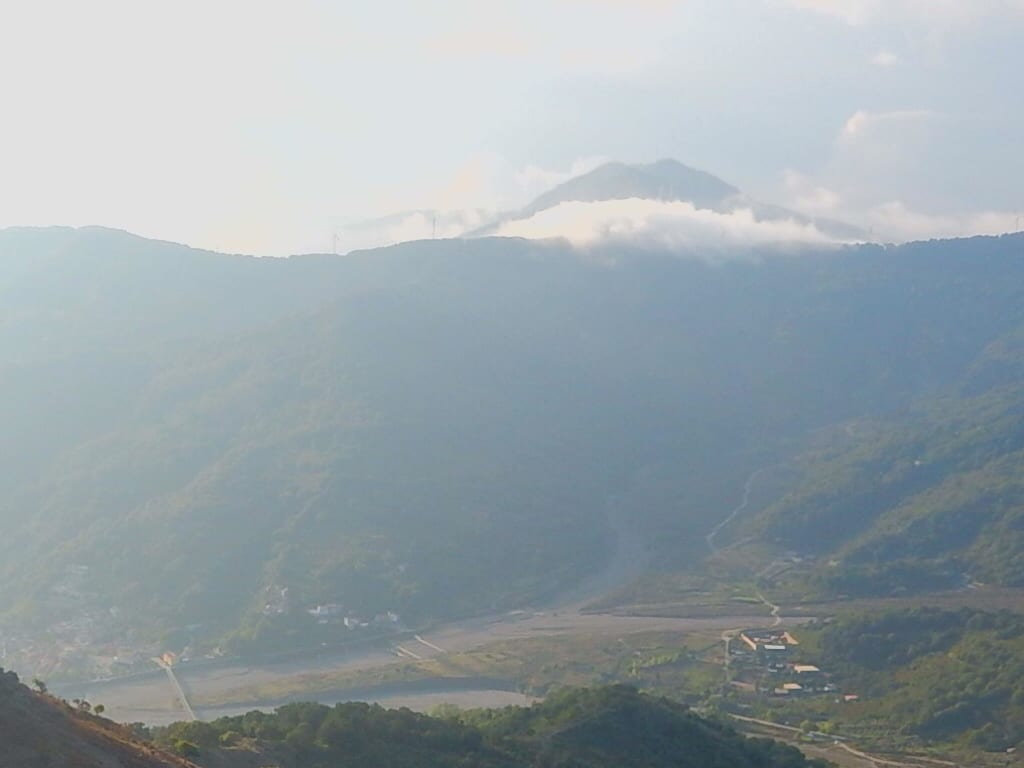
One valley, many habitats
The Alcantara Valley is not “a single” environment: it is a sequence of habitats that follow one another from the river mouth to the sources, with an elevation difference of more than 1,200 metres along 50 km of river. Each habitat has its characteristic fauna, and this explains the surprising biological richness of the valley:
- coastal strip (Capo Schisò, river mouth): mixed dune and estuary environments;
- agricultural valley floor: cultivated fields, olive groves, citrus and hazelnut groves;
- river and banks: riparian vegetation, pools, gorges;
- wooded slopes: Mediterranean scrub, oak woods, chestnut groves;
- upper ridges: pastures, rock faces, bare rock of the Peloritani;
- Etna side: pine forests, lava badlands, pioneer environments.
This geomorphological variety corresponds to rich biodiversity, particularly in birdlife.
Birds: 174 species and a few emblems
Studies in the Alcantara River Park have recorded at least 174 bird species, including residents, migrants and occasional visitors. For birdwatchers, this is a rare heritage.
Diurnal raptors
- Golden eagle (Aquila chrysaetos): high-mountain raptor that frequents the ridges of the Peloritani and Nebrodi. Sightings possible on the higher reliefs.
- Bonelli’s eagle (Aquila fasciata): a Mediterranean species of great conservation interest, in Sicily reduced to a few dozen pairs. It frequents rock faces and open ridges. Sighting it is a rare event and should be done with the greatest discretion.
- Kestrel, common buzzard, hobby, peregrine falcon: more widespread, often visible flying along the canyon walls and on the slopes.
Nocturnal raptors
- Eagle owl (Bubo bubo): very rare but present in the most isolated areas.
- Little owl, scops owl, barn owl: more common, especially near villages and rural areas.
Aquatic and riparian species
- Kingfisher (Alcedo atthis): typical of the Alcantara banks, recognisable by its low and direct flight. Frequents the calmer stretches of the river.
- White-throated dipper (Cinclus cinclus): a small passerine that dives to feed on bottom invertebrates. An indicator of clean waters.
- Herons and egrets: passing or resident, especially in the more open riverbed areas.
Migrants
March-May and September-October see the passage of swifts, swallows, house martins, Western Bonelli’s warbler, chiffchaffs and many other species. Open areas and the slopes of the Peloritani are privileged observation points.
Fish and river fauna
Mediterranean trout
The most important fish species in the valley is the Mediterranean trout (Salmo macrostigma), endemic to Sicily and some Mediterranean areas. It is an indicator species of good water quality: its presence certifies that the river maintains adequate oxygenation and purity levels.
The population is in precarious balance due to various pressures (introduction of alien trout, fishing, habitat alterations). Fishing is regulated by the park.
Freshwater crab
The freshwater crab (Potamon fluviatile) is another biological indicator: it lives in clean watercourses with good oxygen levels. You find it under stones in the calmer stretches of the river.
Other fish
Chubs, eels and a few minor species complete the fish picture.
Amphibians and reptiles
Amphibians
- Edible frog (Pelophylax sp.): the most common species in pools and streams in the park.
- Common toad (Bufo bufo): present in wetland areas and under stones.
- Tree frog (Hyla sp.): small arboreal amphibian, recognisable by its evening call.
- Newt and occasionally Savi’s spectacled salamander: in some protected wetland zones.
Reptiles
- Sicilian wall lizard, Western green lizard, Western whip snake: the most common, visible along sun-warmed trails.
- Common viper: possible in wooded areas and on rocky slopes. Not aggressive but to be respected with caution if sighted.
- European pond turtle: in some calm river stretches.
- Moorish gecko: frequent on village walls and around dwellings.
Mammals
Mammals are often less visible than birds, but not absent:
- Fox, porcupine, weasel: widespread.
- Wild rabbit, hare: in open areas.
- Wild boar: increasing in recent years in some wooded zones.
- Bats: several species, particularly linked to the lava caves of the valley (Grotta dei Cento Cavalli and other smaller ones).
Insects and invertebrates
For those who love ecosystems in detail, the valley offers:
- numerous species of butterflies, some endemic to Sicily;
- dragonflies along the river and pools;
- beetles linked to ancient oaks;
- aquatic invertebrates (mayflies, stoneflies, caddisflies) which, like the trout, indicate water quality.
Best observation points
| Species/group | Where | When |
|---|---|---|
| Diurnal raptors | Peloritani ridges, Vulcanetto di Mojo | All year, morning |
| Bonelli’s eagle | Remote areas, rock faces | Spring, from a distance |
| Kingfisher | Calm riverbeds, Le Rive at Graniti | All year |
| Migrants | Ridges and open slopes | March-May, Sept-Oct |
| Amphibians | Pools, damp paths | Spring, evening |
| Bats | Lava caves, Byzantine cubes | Sunset, spring |
Good practice for observation
- Distance first: for raptors and sensitive fauna, use binoculars or a telephoto lens. Do not approach nests.
- No drones in protected areas without authorisation.
- Silence: wildlife is much more visible to those who walk quietly.
- Times: early morning and late afternoon are the best times for most species.
- No food offered: altering the feeding habits of wildlife does more harm than good.
- Reporting relevant encounters: sightings of rare species can be communicated to the park and to organisations like LIPU.
Further reading
- Le Rive itinerary (Graniti), accessible birdwatching.
- Gurne itinerary, pools and river environment.
- Montagna Grande itinerary, ridges for raptors.
- Geology of the Gorges, the geological frame in which the wildlife moves.