The wine of the Alcantara Valley
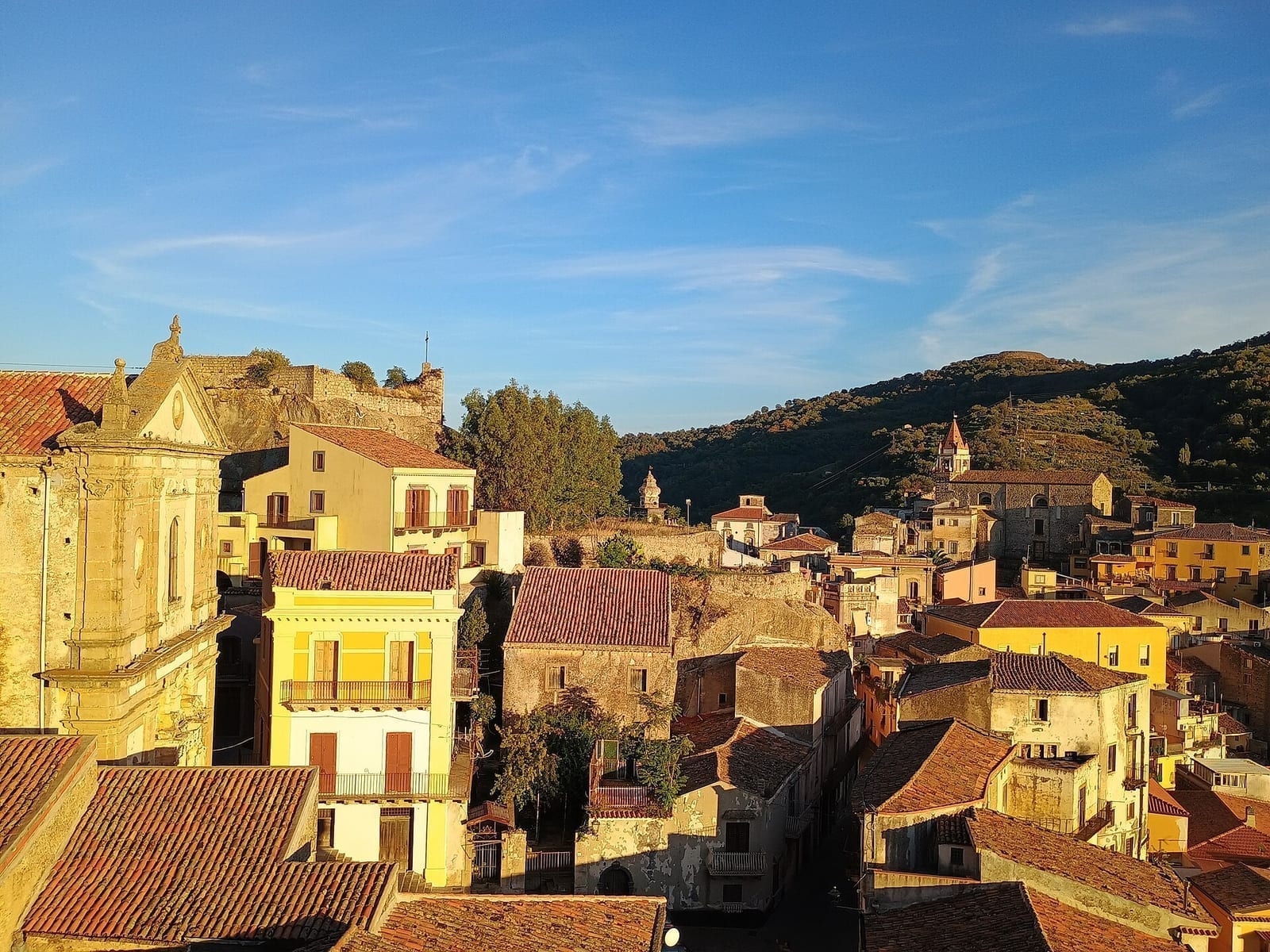
Etna’s north slope falls largely within the municipality of Castiglione di Sicilia and its frazioni — Passopisciaro, Solicchiata, Rovittello, Verzella — a territory that faces the Alcantara Valley, bounded to the north by the river. It was here, on soils of volcanic sand, that Sicily’s first DOC was born in 1968.
Grapes, styles and contrade
The reds speak Nerello Mascalese, joined by Nerello Cappuccio in the blends; the whites, Carricante and Catarratto. The rules cover Etna Rosso (and Riserva), Bianco, Bianco Superiore (only at Milo), Rosato and Spumante. The contrade — recognised since 2011, over 130 — work as cru: each contrada wine reflects its lava flow, altitude and microclimate. Explore grapes, styles and contrade in the panel below.
A terroir like no other
Three things make these vineyards unique: the ungrafted bush vines (saved from phylloxera by the volcanic sand), the Etna alberello trained by hand on dry lava-stone terraces, and the altitude — from 400 to over 1,000 metres, among the highest vineyards in Europe, with strong day-night temperature swings that give freshness and longevity.
Wine tourism, with care
The Strada del Vino dell’Etna links over twenty estates across Castiglione, Randazzo and Linguaglossa; the north slope can also be visited by the “wine train” along the historic Circumetnea railway. Tasting times, prices and formats vary widely: contact the wineries directly and check before setting off. In November 2023 the appellation began the path toward DOCG status — still ongoing.